You keep repeating the same reminders
You want to think through what your child understands, what may be behind the behavior, and how to communicate the expectation.


Vital Parenting Series
By Frank Dixon
Explore a calmer way to set limits, respond to behavior, and stay connected.
When a simple request turns into another disagreement, you want more than a louder reminder. You want a way to explain the limit, understand what is happening, and help your child learn.
Frank Dixon explores seven parenting skills across nine chapters—from empathy and choices to redirection, learning from mistakes, and consistent expectations.


Check Kindle, Paperback, and Hardcover options on Amazon. Audiobook on Audible.
From the book
A passage on seeing connection as part of guidance.
“Empathy makes us feel more connected and understood. We all want support from our loved ones.”
Frank Dixon · Chapter 4: Don’t be Mean—Be Empathetic Instead · printed page 20
Find your starting point
You want to think through what your child understands, what may be behind the behavior, and how to communicate the expectation.
You are looking for a way to listen and offer appropriate choices while remaining clear about the limits that matter.
7 Vital Parenting Skills for Improving Child Behavior and Positive Discipline
Another reminder to get ready. Another disagreement about putting something away. Another “no” before you have even finished your sentence. You want your child to understand the limit—and you want to feel better about how you explain it.
7 Vital Parenting Skills for Improving Child Behavior and Positive Discipline explores ways to respond with more intention. Frank Dixon brings together seven parenting skills that connect everyday behavior with empathy, choices, redirection, learning, and clear expectations.
After two introductory chapters, the book turns to possible reasons for difficult behavior. It considers unmet needs, strong feelings, social skills, attention, and a growing wish for independence.
The next chapter focuses on empathy: listening to your child’s perspective and thinking about the example you set. Together, these topics invite you to pause and consider the situation before deciding how to respond.
The middle chapters explore choices, a yes environment, and redirection. The idea is to think about what your child can do, where a choice is appropriate, and how you might guide them toward another activity.
That does not mean agreeing to everything. The manuscript explicitly keeps “no” for safety and health reasons. The page’s chapter guide shows how these subjects fit with the book’s later emphasis on clear, consistent expectations.
The final skill chapters look at mistakes as learning opportunities and the importance of communicating expectations. You can use them to reflect on a recent disagreement: What did your child understand? What could you explain differently? What can they practice next time?
Start with the issue closest to your family today, then return to the other skills as you need them. Read the short excerpt, explore the nine-chapter guide, or hear the original audiobook sample before choosing an edition.
This is a general parenting guide for parents and caregivers. It offers topics and examples to consider, rather than promising that any single approach will eliminate tantrums, arguments, or every difficult day.
Inside the book
Two introductory chapters set the context. Seven skill chapters explore understanding, connection, and clear guidance.
Chapter 1 · What is Positive Discipline?
Explore the book’s introduction to positive discipline and its emphasis on guiding behavior. Consider how connection and teaching fit alongside limits.
Chapter 2 · The Seven Vital Parenting Skills for Improving Child Behavior
Get an overview of the approach before choosing a chapter. The skills cover understanding behavior, empathy, choices, a yes environment, redirection, mistakes, and expectations.
Chapter 3 · Parenting Skill #1: Find Out the Reasons for Misbehavior
Read about possible reasons for difficult behavior, including unmet needs, strong feelings, and wanting more independence. Reflect on what might be happening before choosing a response.
Chapter 4 · Parenting Skill #2: Don’t be Mean—Be Empathetic Instead
Explore listening, compassion, and the example you set. The chapter considers how to acknowledge your child’s perspective when a situation feels frustrating.
Chapter 5 · Parenting Skill #3: Offer Them Choices
Read about offering choices and creating opportunities for your child to have a say. Consider where a choice fits while keeping the boundaries of the situation clear.
Chapter 6 · Parenting Skill #4: Stop Saying No
Explore the book’s idea of a yes environment: more opportunities for safe exploration and fewer unnecessary restrictions. The chapter explicitly retains “no” for safety and health reasons.
Chapter 7 · Parenting Skill #5: Redirect, Redirect, Redirect
Explore redirection as a way to move from an unhelpful activity toward another option. Think about everyday transitions while keeping safety and your child’s needs first.
Chapter 8 · Parenting Skill #6: Treat Every Mistake as a Learning Opportunity
Consider how mistakes can become conversations about what happened and what to do next. The chapter discusses supporting learning rather than making every error a confrontation.
Chapter 9 · Parenting Skill #7: Be Consistent with Expectations
Read about communicating expectations clearly and following through consistently. Reflect on whether your child understands what you are asking and what happens next.
Choose the skill that matches the moment your family is facing.
Before you choose
Parents and caregivers who want to reflect on everyday behavior, family communication, empathy, choices, and expectations. It is written for adults, rather than as a workbook for a child to complete.
Nine. Two introductory chapters explain positive discipline and the seven-part approach. Seven further chapters explore the individual parenting skills.
No. The book includes clear expectations and consistency. Its discussion of a yes environment explicitly keeps “no” for safety and health reasons.
The chapter explores making room for safe discovery and thinking about what a child can do, rather than relying on repeated restrictions. It does not remove necessary safety limits.
It discusses possible reasons for difficult behavior, including unmet needs, strong feelings, social skills, attention, and wanting independence. It encourages considering the situation before choosing a response.
This is a general positive-discipline guide. Teaching Kids With ADHD is a separate Vital Parenting title focused on routines, expectations, praise, distractions, and positive attention while supporting a child with ADHD.
Use Amazon to check Kindle, Paperback, and Hardcover options, current prices, and availability in your location. Use Audible for the audiobook. Retailer editions and availability can vary.
Yes. Use the audiobook sample button beneath the cover to hear the narration before visiting the Audible listing.
Yes. Download the references excerpt (PDF, 7 pages) to see the bibliography included in the manuscript.
Start reading
Explore seven parenting skills for guiding behavior while keeping empathy and clear expectations in view.
Check Kindle, Paperback, and Hardcover options on Amazon, or choose the audiobook on Audible.
Continue the Vital Parenting series
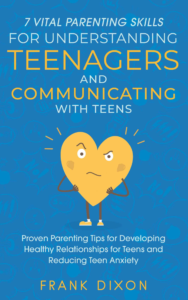
When your next focus is the teenage years
Choose this next for a closer look at teenage independence, expectations, choosing battles, and staying connected as your child grows.
Explore this book →
When you want a guide focused on ADHD
Choose this next for a parenting guide focused on routines, manageable expectations, praise, distractions, and positive attention while supporting a child with ADHD.
Explore this book →