When a friendship hits a difficult patch
You want to listen, understand what happened, and consider how to help your child work through a friendship problem.


Happy Children Series
By Frank Dixon
Help your child build friendships while keeping your own connection strong.
When friendship gets complicated, you want to help without taking over. And as your child grows, you want to stay close while giving them room to find their way.
Frank Dixon’s seven-chapter guide explores peer friendships, school relationships, family bonds, and balancing parental guidance with connection.


Explore Kindle, Paperback, and Hardcover on Amazon. Audiobook on Audible.
From the book
A passage on supporting your child through friendship difficulties.
“The first thing you need to do to help your child navigate through social drama is to listen.”
Frank Dixon · Chapter 4: Friendships in School · printed page 29
Find your starting point
You want to listen, understand what happened, and consider how to help your child work through a friendship problem.
You want a warm, trusting relationship while remaining the parent your child can look to for guidance.
How Parents Can Foster Friendship in Children
A falling-out at school. Trouble joining a group. A child who wants your help one day and more independence the next. Supporting their friendships can leave you wondering when to step in, what to say, and when to give them space.
How Parents Can Foster Friendship in Children explores both the friendships children form with peers and the relationship they share with you. Its seven chapters consider connection, communication, family examples, and the balance between closeness and parental guidance.
The opening chapters look at the meaning of friendship, the qualities of a good friend, and skills that help relationships develop. The book then considers friendship at different ages, including school-age children and teenagers.
A dedicated chapter explores school friendship issues and offers do’s and don’ts for parents. The focus includes listening to your child’s experience and considering how to be helpful without managing every interaction for them.
Friendships at home matter too. The manuscript looks at the relationships children observe between adults and asks whether parents should also be friends with their children.
Rather than treating closeness and guidance as an either-or choice, the book explores a middle ground. It considers how parents can remain a trusted source of support while providing boundaries and direction.
The later chapters discuss healthy bonds, power struggles, and common friendship questions. You can use these topics to reflect on a recent conversation, think about a school concern, or consider how your family handles disagreements.
Explore the chapter guide below, read the short excerpt, or hear the narration before choosing an edition. Start with the issue closest to your family today and return to the other chapters as your child’s relationships change.
Inside the book
Choose the topic that matches the question on your mind.
Chapter 1 · Understanding Friendship
Explore the meaning of friendship, what connects people, and the qualities of a good friend. Find a foundation for conversations about the relationships your child is building.
Chapter 2 · Essential Friendship Building Skills
Read about the building blocks of friendship and the influence of parenting style. Reflect on the examples and everyday opportunities your child has to practice relating to others.
Chapter 3 · How to Make Friends
The book discusses young children’s friendships, school-age friendships, and teenage friendships. Explore how the situations children face can change as they grow.
Chapter 4 · Friendships in School
Explore the chapter’s do’s and don’ts for helping children navigate school friendship issues. Consider how to hear your child’s perspective and support them without taking over every interaction.
Chapter 5 · Friendships at Home
Consider the relationships children see at home and the question of being both parent and friend. The chapter explores the middle ground between connection, guidance, and boundaries.
Chapter 6 · Fostering Healthy Bonds
Read the book’s discussion of power struggles and ways to lead without turning every disagreement into a contest. Reflect on how your responses can support a healthier relationship.
Chapter 7 · Friendship FAQs
The final chapter brings together common questions about friendship and parent–child relationships. Use it to revisit concerns and connect the book’s themes to your family’s experience.
Find a starting point for the friendship question on your mind.
Before you choose
Parents and caregivers who want to support children’s peer friendships and strengthen their own relationship with their child. It includes discussions of childhood, school-age, and teenage friendships.
Both. Early chapters explore friendship skills and peer relationships; later chapters consider friendships at home and the balance between being a parent and a friend.
Yes. A dedicated chapter discusses school friendships and includes do’s and don’ts for parents helping children navigate friendship difficulties.
The manuscript explicitly explores the middle ground between closeness and parental guidance. It considers both a parent’s supportive role and their responsibility to provide direction.
The healthy-bonds chapter discusses power struggles in relationships and ways parents can approach leadership and communication. It offers topics to reflect on rather than promising a conflict-free home.
Use the Amazon button to check Kindle, Paperback, and Hardcover options, prices, and availability in your location. Use Audible for the audiobook. Retailer availability can vary.
Yes. Use the audiobook sample button beneath the cover to hear the narration before visiting the Audible listing.
This book focuses on friendship, school relationships, parent–child closeness, and power struggles. Develop Happy Children takes a broader look at social skills such as listening, empathy, manners, collaborative play, and cooperation.
Yes. Download the references excerpt (PDF, 4 pages) to see the bibliography included in the manuscript.
Start reading
Explore friendship skills, school relationships, and ways to balance connection with guidance as your child grows.
Check Kindle, Paperback, and Hardcover options on Amazon, or choose the audiobook on Audible.
Continue the Happy Children series
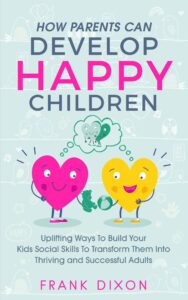
When communication skills are the next focus
Choose this next for a broader look at listening, empathy, manners, friendship, and cooperation in everyday family life.
Explore this book →
When trust and openness are the next focus
Choose this next to explore honesty, privacy, secrecy, and more open parent–child communication.
Explore this book →